






MacMillan Center for International and Area Studies at Yale – June 10, 2026
The Gilder Lehrman Center for the Study of Slavery, Abolition, and Resistance is excited to announce the winner of the CT History Day Special Prize for the category of Outstanding Entry Related to Slavery or Abolition.
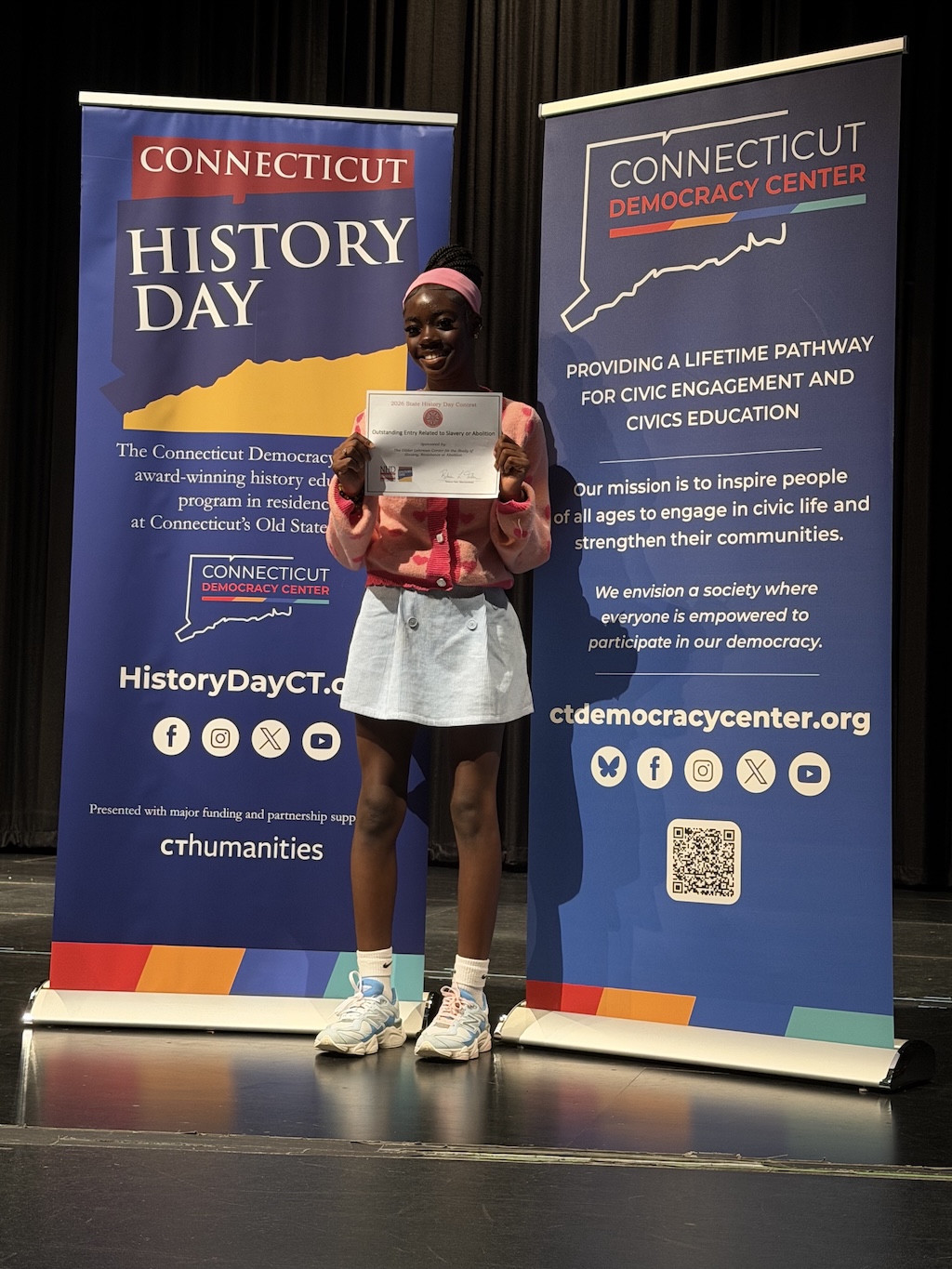
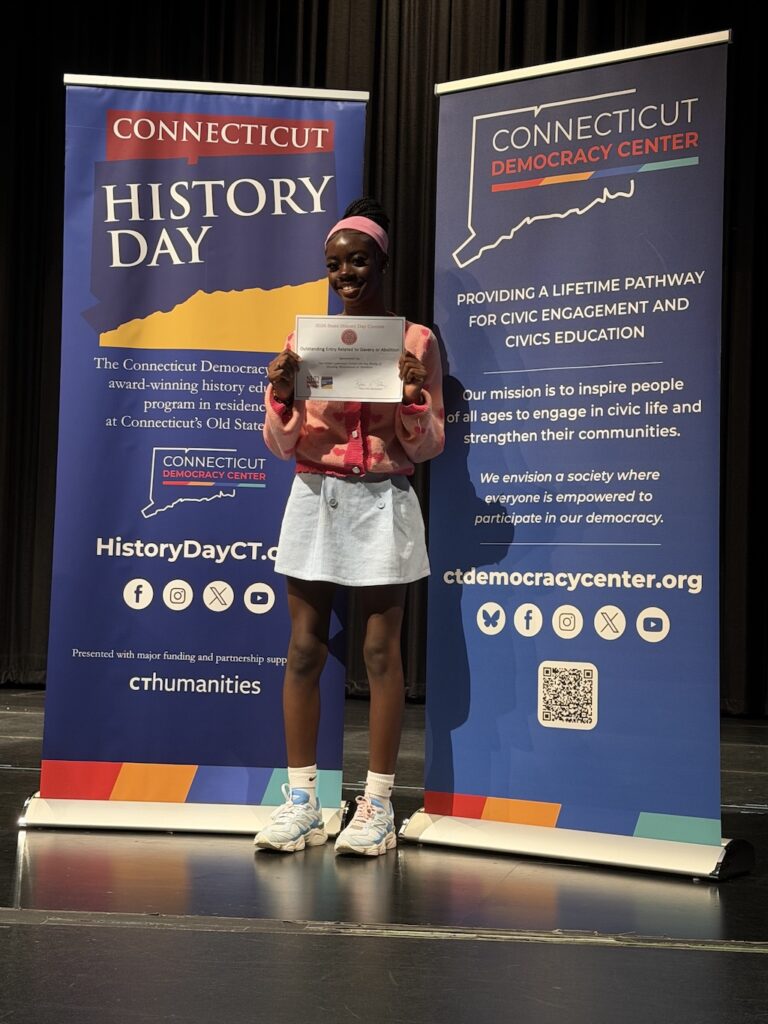
Every year, the GLC is proud to sponsor an award for an outstanding submission that focuses on the study of enslavement. This year, the prize was awarded to Haylee Spence, an eighth grader at James H. Moran Middle School in Wallingford, CT. She chose to focus her project on the history and meaning of Juneteenth.
The interview below offers Haylee’s perspective on creating her exhibit, followed by reflections from her teacher.
My name is Haylee Spence. I am in the 8th grade, and I go to James H. Moran Sr. Middle School in Wallingford, CT.
What drew you to learning more about Juneteenth?
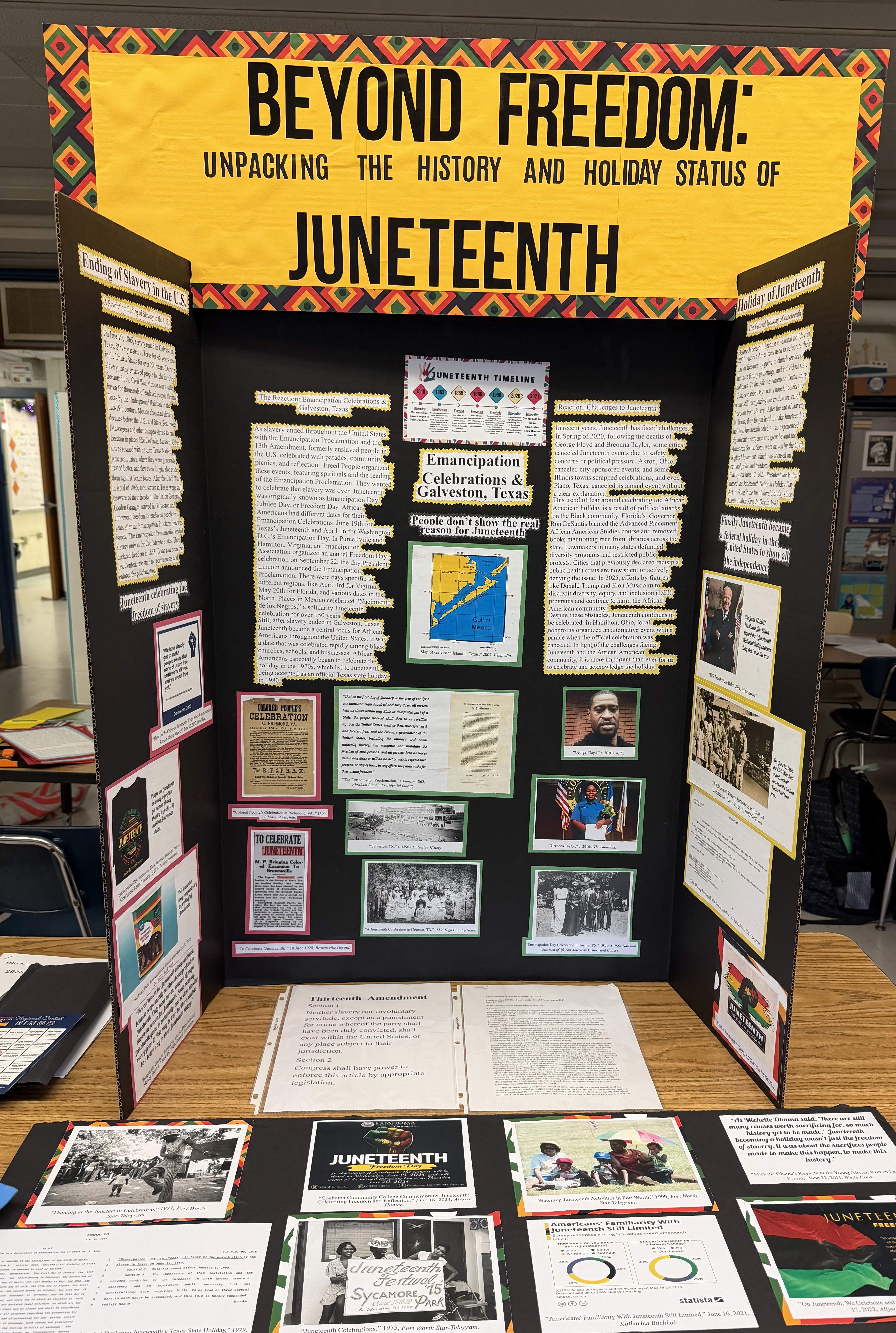
I was drawn to the significance of the history. The historical events of Juneteenth were fascinating, including when African-Americans gained freedom in Galveston, Texas, and how Juneteenth and other emancipation celebrations turned into the holiday we know today. I was also interested in how Juneteenth has been celebrated recently, since it has become a federal holiday. Companies have tried to make a profit from the holiday without understanding the real history behind Juneteenth.
What was your process in researching the topic? What sources did you use?
I started by researching Juneteenth and how it became a holiday in Texas. I was familiar with the history of Galveston, Texas, and how this was the last location in the United States where enslaved people learned about their freedom when Union troops arrived in 1865.
The National Museum of African American History and Culture was one of the most important sources I used on this project because it had many primary and secondary sources on the topic.
I developed the argument: Juneteenth was made to remember the historical injustices of slavery, and to celebrate Black history, which has not always been celebrated in a way that respects the traumatic past. Juneteenth celebrates the freedom of enslaved people in Galveston, Texas, and has become a symbol of freedom for Black Americans, which led to it becoming a National Holiday in 2021.
What was the most fascinating thing you learned about?
I learned, today, Juneteenth is a celebration of freedom and resilience. It is a historical turning point and a symbol of hope. Today, we celebrate it as a way of preserving African American culture and as an educational opportunity, but in recent years, Juneteenth has faced challenges.
Following the deaths of George Floyd and Breonna Taylor, some cities canceled Juneteenth events due to safety concerns or political pressure. As we continue to see attacks on the African American community through defunded diversity programs and restricted public protests, it is important to remember the history of Juneteenth more than ever.
I learned today that Juneteenth is a celebration of freedom and resilience. It is a historical turning point and a symbol of hope.
After discussing her project, Haylee’s teacher, Elizabeth Willett-Mindell, shared additional thoughts about the significance of the exhibit and the historical context it explored:
Haylee’s exhibit talks about how Juneteenth has developed since June 19, 1865. Many of us know the history of that day, but are unaware of the cultural significance Juneteenth maintained in public memory long before it received federal or even state recognition.
One of the strengths of Haylee’s exhibit was how she showed the development of local, initial emancipation celebrations throughout the United States, as well as the resurgence of Juneteenth during the Civil Rights Movement, which led to it becoming a Texas state holiday in 1979, over 114 years after Union General Gordon Granger declared freedom in Galveston.
https://macmillan.yale.edu/glc/stories/connecticut-history-day-winner